Anchorage Principle

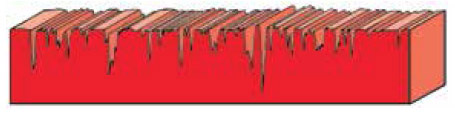
The required bore roughness is directly related to the hardness and the mechanical characteristics of the base material. Depending on the combination of sealing plug and base material, anchorage takes place either by the groove profile of the expander sleeve biting into the base material or on anchorage to the surface roughness of the bore.

Note:
When selecting a KOENIG EXPANDER® the bore roughness must always be adjusted according to the hardness of the base material.

Anchorage between sleeve and base material is achieved when the sleeve is a minimum of HB = 30 greater than the base material. If the hardness difference is less, hole roughness of 10 to 30 μm is needed to achieve indicated working pressures.

Anchorage Principle Related to the Base Material

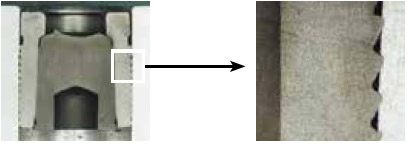
Anchorage due to plug sleeve serrations KOENIG EXPANDER® Series SK / SKC
In aluminum-alloy HB = 90

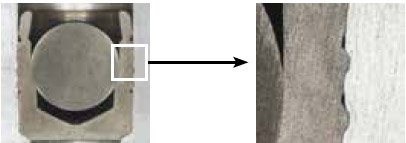
Anchorage due to plug sleeve serrations KOENIG EXPANDER® Series MB 850
In aluminum-alloy HB = 90

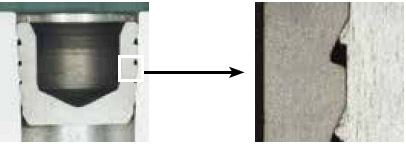
Sufficient anchorage due to plug sleeve serrations KOENIG EXPANDER® Series LK 950
In aluminum-alloy HB = 90

Bore roughness requirements

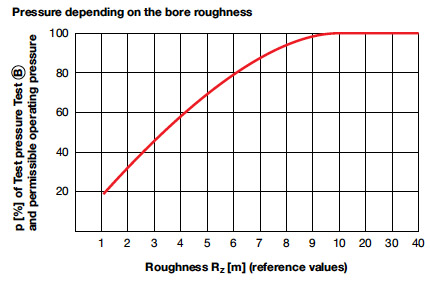
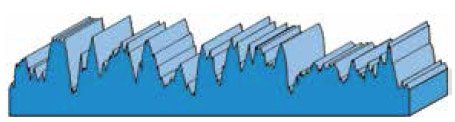
When installing KOENIG EXPANDER(R) plugs in hard base material positive anchoring is not possible. To attain suitable working pressures and anchorage, it is necessary to have a bore roughness of Rz = 10 – 30 μm. At a roughness greater than Rz = 30 μm leakage might occur.

Anchorage Principle Related to the Base Material

Required Roughness Profile

The ideal bore roughness for anchorage is attained by drilling with a twist drill or a core drill.

Undesirable Roughness Profile

By reaming, a one-sided, smooth roughness profile is created. This is not desirable.

All information at a glance: